What Is Commercial Cleaning? (And What It Isn’t)
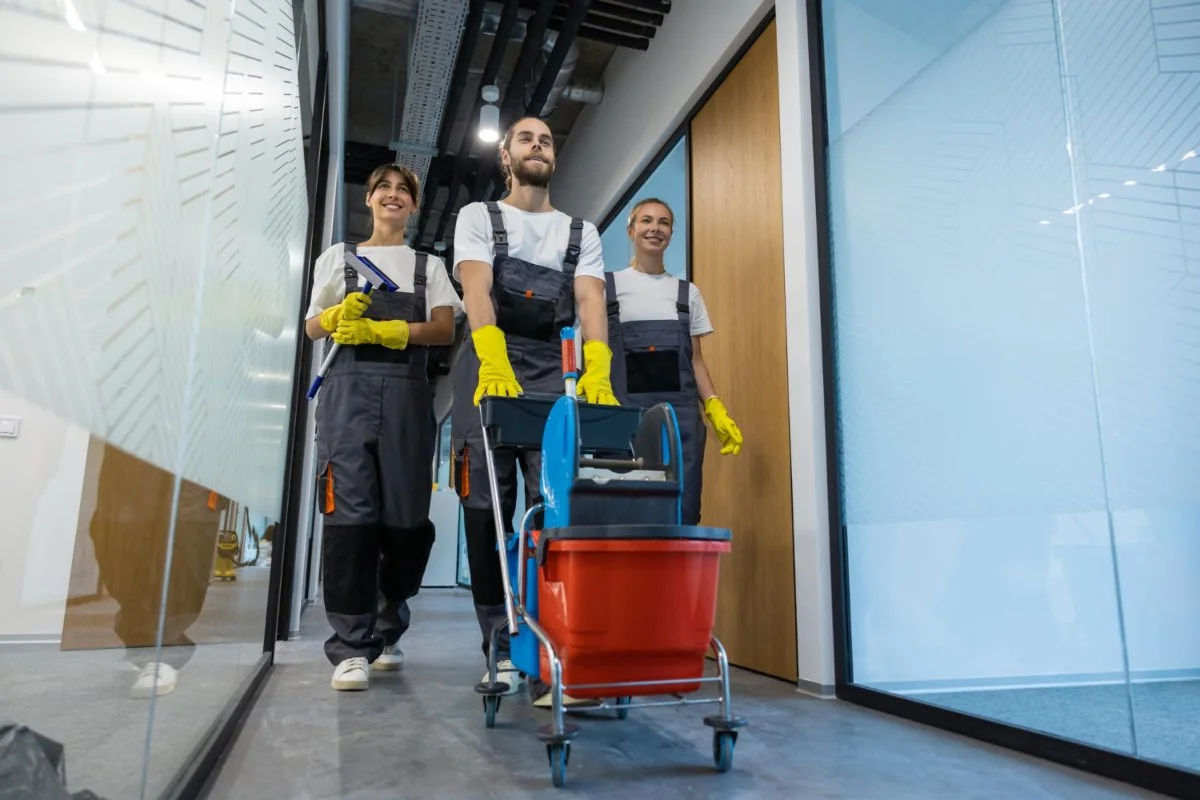
Commercial cleaning is the regular, contracted cleaning of business premises: offices, student accommodation, healthcare sites, residential blocks, shops and public buildings. It’s different from domestic cleaning because it’s run to a written specification, by trained and insured staff, under health and safety law.
The legal duty behind it
Every employer in Great Britain has the same starting point. The Workplace (Health, Safety and Welfare) Regulations 1992 say every workplace, and its furniture and fittings, “shall be kept sufficiently clean”, and that waste shouldn’t build up except in suitable containers. Commercial cleaning is how most businesses meet that duty.
working days were lost to sickness or injury in Great Britain in 2025. Clean washrooms, kitchens and floors are part of keeping people well and safe at work.
Who uses commercial cleaning
Commercial, domestic, industrial and specialist
| Commercial | Domestic | Industrial | Specialist | |
|---|---|---|---|---|
| Where | Offices, shared buildings, public spaces | Private homes | Factories, plant, production areas | Builders cleans, carpets, windows, jet washing |
| How often | Regular, to a schedule | Regular or one-off | Regular, often around production | Periodic or one-off |
| Paperwork | Specification, RAMS, COSHH, insurance | Usually informal | Detailed method statements, permits | Task-specific RAMS |
| Staff | Trained, vetted, supervised teams | Individual cleaners | Trained for machinery and hazards | Trained for the equipment |
What a typical contract includes
Here’s what you’d normally expect inside a commercial cleaning contract for an office. Use our office cleaning checklist for the full task list.
| Included | Usually extra |
|---|---|
| Washrooms, kitchens, bins, touchpoints | Carpet extraction |
| Dusting, vacuuming and mopping | External window cleaning |
| Supervision and quality audits | Builders and deep cleans |
| Holiday and sickness cover | Jet washing and grounds |
| RAMS, COSHH and insurance | Consumables (unless agreed) |
For what to look for in the contract itself, see cleaning contracts, decoded.
Questions we get asked
What’s the difference between commercial and industrial cleaning?
Commercial cleaning covers business premises like offices and shared buildings. Industrial cleaning covers production areas and machinery, with more hazards and stricter safe systems of work.
Do small businesses need commercial cleaning?
Every workplace must be kept sufficiently clean. Small businesses can do it themselves, but a contractor brings cover, training and the paperwork.
Is commercial cleaning the same as facilities management?
No. Cleaning is one service within facilities management, which can also include maintenance, grounds, washroom services and more.
See our services and the industries we work in, or book a free site survey.
Book a site survey