
Daily or Weekly? Setting Cleaning Frequency Without Overpaying
Set frequency zone by zone, not for the whole building. Washrooms and kitchens need cleaning every day the office is used. Desks and floors depend on how busy each area is. Glass, high-level dusting and deep cleans run on a monthly or quarterly plan.
“How often should our office be cleaned?” is usually the first question in a site survey, and the honest answer is that a building doesn’t have one frequency. A busy washroom and a meeting room used twice a week need very different treatment. Paying for both at the same rate is where most offices overspend.
What the law actually requires
The Workplace (Health, Safety and Welfare) Regulations 1992 say: “Every workplace and the furniture, furnishings and fittings therein shall be kept sufficiently clean.” They don’t set a frequency. “Sufficiently clean” depends on how the space is used, which is why a sensible schedule starts with the zones, not the calendar.
of non-fatal injuries to employees reported by employers in 2024/25 were slips, trips or falls on the same level. Floors in entrances, kitchens and washrooms are where frequency matters most.
Frequency by zone
This is the starting point we use on a site survey. Every building moves away from it in places, but it’s a sound default for a typical office.
When to raise or lower the frequency
| Zone | Raise it when | Lower it when |
|---|---|---|
| Washrooms | Visitors use them, or headcount on site rises | Rarely. Keep them to every visit |
| Kitchens | People eat at their desks or the kitchen is shared between floors | A floor is closed or used one or two days a week |
| Desks and floors | Hot-desking, so every desk is used by different people | Fixed desks in a quiet zone, or hybrid days with few people in |
| Entrances | Wet weather, or a shared lobby with heavy footfall | A secondary entrance that’s rarely used |
| Meeting rooms | Client-facing rooms or rooms booked all day | Internal rooms used now and then |
What a zoned plan looks like
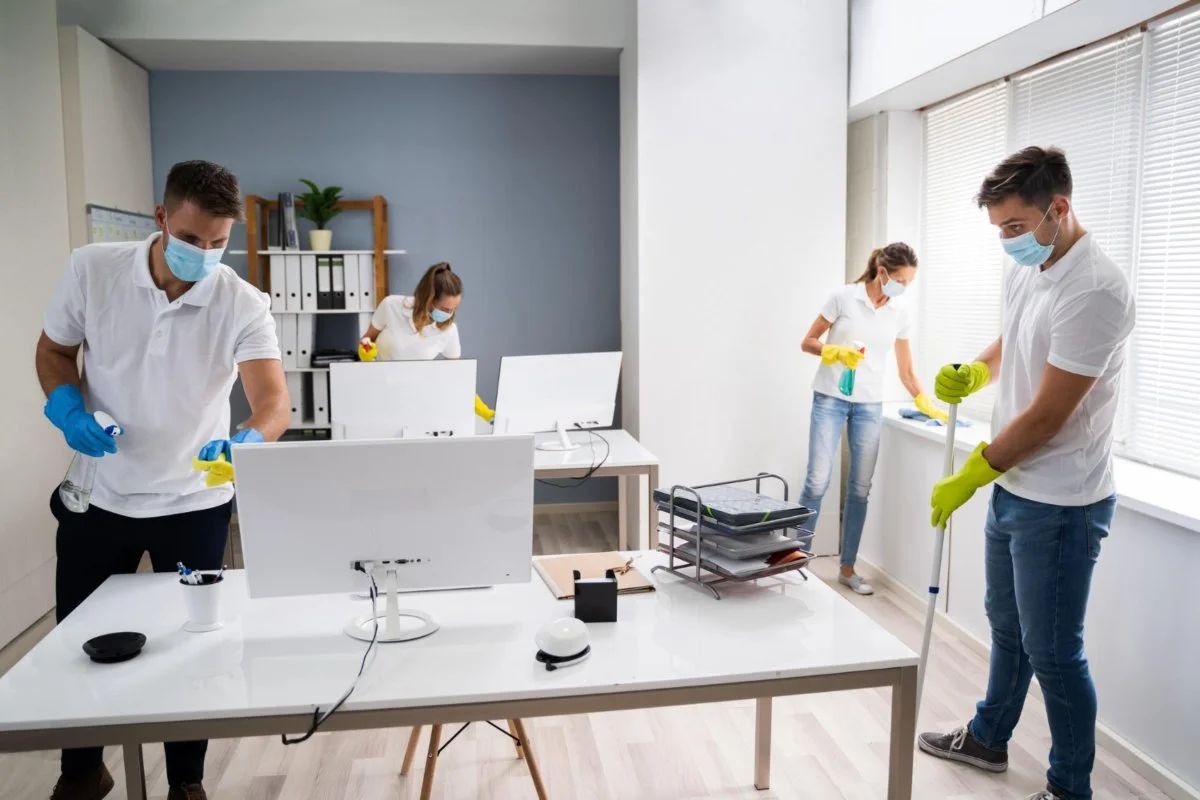
Here’s how one floor of a typical Leeds office looks once each area has its own frequency. The same hours on site go much further when they’re spent where people actually are.
Hybrid working changes the maths
If most of your team comes in on the same three days, cleaning five nights a week to the same standard wastes hours on empty floors. Shift the detailed work to the nights after your busy days and keep a lighter check on the others. Our guide to when your office should be cleaned covers timing in more detail.
Signs your frequency is wrong
- Too low: bins overflowing by mid-afternoon, sticky kitchen surfaces, complaints about the same washroom.
- Too high: cleaners finishing early, rooms that look untouched before they’re cleaned, the same tasks done on empty floors.
- Wrong mix: desks polished every night but glass and high-level dust never touched. That usually means there’s no periodic plan.
Our office cleaning checklist sets out what belongs in each daily, weekly, monthly and quarterly plan.
Questions we get asked
Does an office have to be cleaned every day?
The law requires the workplace to be kept sufficiently clean, not cleaned on set days. In practice washrooms and kitchens need attention every day the office is in use. Other areas can often be cleaned less often.
Is two or three days a week enough for a small office?
It can be, if washrooms and kitchens are covered when people are in and the team keeps desks clear. Check the toilets and bins on the days without a clean.
How often should carpets be deep cleaned?
Most offices plan carpet extraction once or twice a year, more often in entrances and walkways. Budget it as part of a periodic plan rather than waiting for stains.
We’ll walk your floors, map the zones and show you where the hours should go.
Book a site survey