
Early, Late or Daytime: When Should Your Office Be Cleaned?
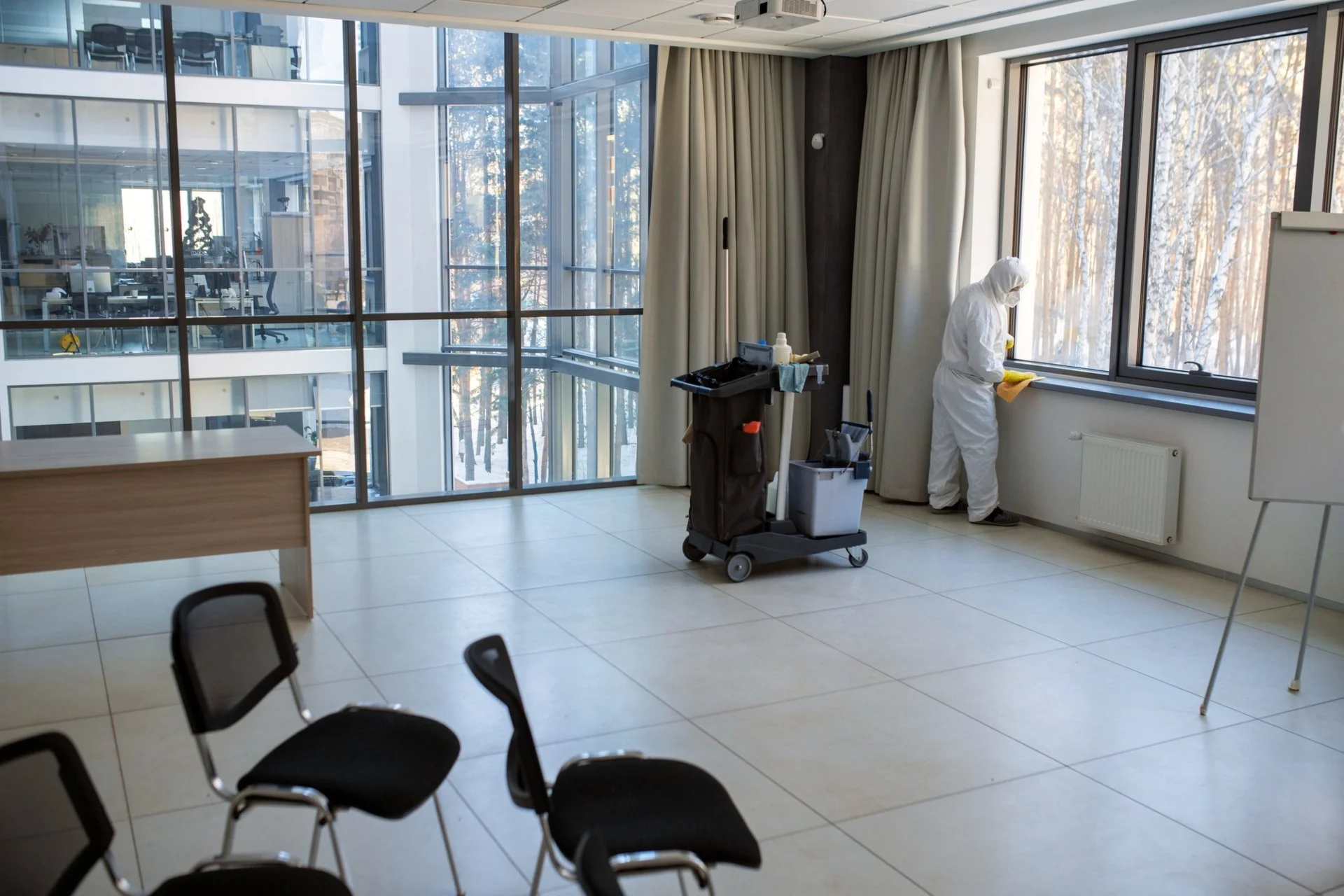
Evening cleaning suits most offices. Early mornings suit buildings that must be spotless at opening. Daytime cleaning is often the best choice for hybrid offices: cleaners are visible, issues get fixed straight away, and it’s easier to keep good staff.
Timing is the decision most buyers leave to the cleaning company, and it shapes almost everything that follows: who holds the keys, how the alarm is handled, whether anyone checks the work, and how long your cleaner stays with you.
of working adults in Great Britain were hybrid working in autumn 2024. Many offices now have busy days and quiet days, and the cleaning slot should follow them.
The three slots
| Early morning | Evening | Daytime | |
|---|---|---|---|
| Best for | Client-facing offices that must be spotless at 9am | Most offices, especially with full occupancy | Hybrid offices, shared buildings, sites with on-site teams |
| Disruption | None | None, unless people work late | Low if cleaners avoid desks in use |
| Security | Keys and alarm codes needed | Keys and alarm codes needed | Often none: staff let cleaners in |
| Checking quality | Hard: nobody sees the work done | Hard: issues found next morning | Easy: problems fixed the same day |
| Keeping staff | Hardest slot to recruit for | Moderate | Easiest: normal hours |

A rota built around a hybrid week
If your team is mostly in on Tuesday to Thursday, the cleaning week can follow the same pattern. Here’s an example for a 40-person office.
| Day | Office | Slot | Focus |
|---|---|---|---|
| Monday | Quiet | Daytime | Washrooms, kitchen, reception |
| Tuesday | Busy | Evening | Full clean, all zones |
| Wednesday | Busy | Evening | Full clean, all zones |
| Thursday | Busy | Evening | Full clean plus weekly tasks |
| Friday | Quiet | Daytime | Washrooms, kitchen, bins, glass touch-up |
Security and lone working
Evening and early cleaning usually means a cleaner working alone with your keys and alarm codes. Ask how keys are logged, who is called if the alarm goes off, and how the supplier checks that a lone worker is safe. The HSE’s guidance on lone working sets out what employers should have in place. You can also ask about it with our nine questions for choosing a cleaning company.
Which slot should you choose?
- If your office is full five days a week and clients visit, choose evening, with an early check on reception if needed.
- If you’re hybrid with clear busy days, mix evening cleans after busy days with daytime visits on quiet days.
- If you share a building with a managed reception, consider daytime and avoid the key-holding altogether.
The slot and the frequency for each zone work together, so set them at the same time.
Questions we get asked
Is daytime cleaning disruptive?
It doesn’t need to be. Cleaners work around people, keep noisy tasks like vacuuming for quiet areas or quiet times, and focus on washrooms, kitchens and touchpoints.
Can we switch from evening to daytime cleaning mid-contract?
Usually, yes, with notice. Changing hours can affect the cleaner’s contract, so a good supplier will plan the change with them rather than simply swapping staff.
Do cleaners need our alarm codes?
Only for early or evening cleaning in buildings without a manned reception. Ask for a written key and alarm procedure.
We’ll look at how your building is used across the week and recommend a rota.
Book a site survey